

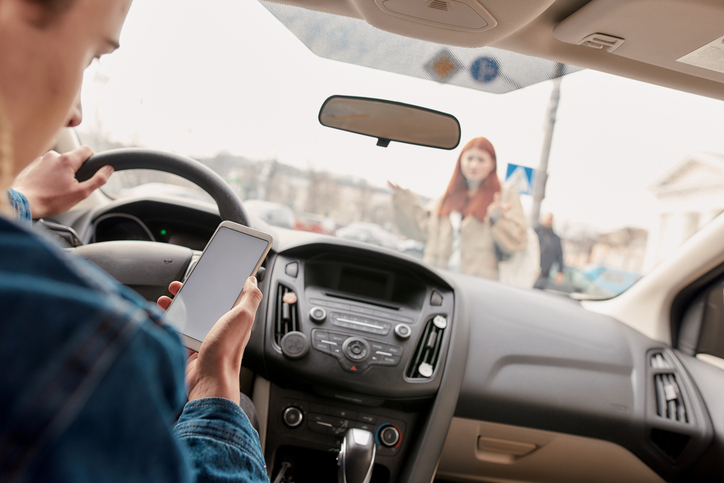
Distracted driving has become one of the most common causes of serious vehicle collisions across Fresno and the greater Central Valley. Even a few seconds of inattention can lead to devastating crashes on highways like 99, surface streets in downtown Fresno, or rural roads connecting nearby agricultural areas. When these accidents happen, one of the most important questions becomes how fault is proven.
Because distracted driving often happens in a matter of seconds, the evidence used to reconstruct what occurred is critical. California law requires injured individuals to show that another driver’s negligence contributed to the crash, and, in distracted-driving cases, that evidence can come from several sources.
Understanding What Counts as Distracted Driving
Distracted driving is not limited to texting. It can include any activity that distracts from the road. Common examples include:
- Using a phone for calls or messaging
- Adjusting navigation systems
- Eating or drinking while driving
- Interacting with passengers
- Reaching for objects inside the vehicle
- Looking away from traffic conditions
In Fresno, where traffic congestion can change quickly, even brief distractions can lead to rear-end collisions, intersection crashes, or high-speed freeway impacts.
Why Evidence Matters in Distracted Driving Cases
Unlike cases where fault is immediately obvious, distracted driving is not always directly observed. Drivers rarely admit they were distracted, and the moment of negligence may not be captured by witnesses.
This is why evidence becomes the foundation of a claim. It helps reconstruct the moments leading up to the crash and establish whether a driver failed to exercise reasonable care.
Key Types of Evidence That Can Prove Fault
Several forms of evidence may be used to support a distracted driving claim:
1. Phone Records
One of the most important pieces of evidence can be cell phone data. Call logs, text message timestamps, and app usage records may help show whether a driver was using their phone at the time of the crash. While privacy laws apply, this information can sometimes be obtained through legal processes.
2. Dash Cameras and Surveillance Footage
Video evidence is often one of the most reliable ways to show what happened. This may include:
- Dash cameras from either vehicle
- Traffic cameras at intersections
- Surveillance footage from nearby businesses
- Residential security cameras
Even a few seconds of footage can provide clarity about driver behavior before impact.
3. Witness Statements
Independent witnesses can play an important role in distracted driving cases. A witness may observe a driver:
- Looking down at a phone
- Swerving without explanation
- Failing to brake before impact
Because witnesses have no financial interest in the case, their observations can carry significant weight.
4. Police Reports
Law enforcement officers often document statements made at the scene, physical evidence, and preliminary conclusions. While not final determinations of fault, police reports can support an investigation into distracted driving.
5. Vehicle Data Systems
Many modern vehicles contain onboard systems that record speed, braking activity, and steering input. This data may help reconstruct whether a driver reacted appropriately before a collision.
6. Scene Evidence
Physical evidence from the crash site can also help establish fault. This includes:
- Skid marks
- Vehicle positioning
- Damage patterns
- Debris fields
These details help accident reconstruction experts understand how the collision occurred.
The Challenge of Proving Distraction
One of the biggest challenges in these cases is that distraction often happens internally. A driver may briefly glance at a phone or become mentally distracted without any outward signs. Because of this, cases often rely on combining multiple forms of evidence rather than a single source.
For example, phone records may show activity, while witness statements and crash data help confirm timing and impact.
Why Early Investigation Is Important
Evidence in distracted driving cases can be lost quickly. Video footage may be deleted, witnesses may become harder to locate, and digital records may become more difficult to obtain over time.
Early investigation helps preserve key information and ensures that important details are not overlooked.
Moving Forward After a Distracted Driving Accident
A serious crash can leave victims facing medical bills, lost income, and long-term recovery challenges. Understanding what evidence may support a claim is an important step in holding a negligent driver accountable.
Fresno Car Accident Attorney
At Fowler | Helsel | Vogt, we help individuals and families throughout Fresno and the Central Valley pursue claims arising from distracted-driving accidents. If you have questions about your case, contact Fowler | Helsel | Vogt at (559) 900-1280 to learn more about your legal options.